Dispelling common myths about hospice care is essential for understanding its true value. Far from merely a place at life’s end or a last resort for care, hospice offers a humane approach emphasizing comfort and dignity for patients with life-limiting illnesses—and not just for cancer. If you’re seeking accurate insights about hospice care, this article demystifies the misconceptions and offers a clear, compassionate portrait of what this vital service truly represents.
Key Takeaways
Hospice is a service, not a place, focused on providing comfort and dignity and can be provided in various settings such as a patient’s home or healthcare facilities, debunking the myth that it is only a physical location or for cancer patients only.
An interdisciplinary hospice care team, including medical professionals, social workers, and spiritual advisors, works collaboratively to manage symptoms and provide holistic support to patients and their loved ones, reflecting the comprehensive approach to end-of-life care.
The cost of hospice care is often more manageable than perceived, with coverage available through Medicare, Medicaid, private insurance, and community resources, removing financial barriers to accessing these necessary supportive services.
Clearing the Air: Addressing Common Hospice Care Myths
We’ll begin by addressing the often misunderstood aspects about hospice care - the common myths. They are as ubiquitous as they are misleading. We’re here to address these misconceptions head-on and set the record straight. After all, dispelling common myths about hospice is the first step in understanding the true nature of this service.
What comes to mind when you hear the word “hospice”? Is it a place, an act of giving up, or a service exclusively for cancer patients? These common hospice myths can form barriers, preventing people from accessing valuable hospice services. But don’t let these misconceptions cloud your understanding. We aim to debunk these myths individually.
A detailed exploration of each hospice care myth will illuminate the reality of hospice care: a comprehensive service centered on comfort, dignity, and emotional support for patients and their loved ones during difficult times.
Are we ready to delve deeper into these myths?
Myth #1: Hospice is a Place, Not a Service
First up, the myth that hospice is a place, not a service. The term ‘hospice,’ historically associated with a place of shelter, has evolved significantly over time. Today, hospice refers to a service focused on providing compassionate support to terminally ill patients, not a physical location.
Hospice care is a philosophy that can be provided in various settings. It’s not confined within the walls of a specific place. It can extend to:
a patient’s own home
an assisted living facility
a nursing home
a hospital
So, the next time you think about hospice, remember, it’s not about where it’s provided, but how.
Myth #2: Hospice Means Giving Up
Next, we address the misconception that opting for hospice care equates to surrendering. This misconception could not be further from the truth. Hospice care does not symbolize the end, but rather a transition to a different form of care, one focused on comfort and quality of life.
When a patient opts for hospice care, it means they’re choosing to focus on living their remaining days to the fullest, despite a terminal illness. It’s about making every moment count, managing pain effectively, and ensuring comfort. In other words, choosing hospice doesn’t mean giving up on life but embracing a different approach to living it.
Myth #3: Hospice is Only for Cancer Patients
Another frequently encountered myth is the belief that hospice services are exclusively for cancer patients. This misconception is limiting and excludes a wide array of patients who could greatly benefit from hospice services. The truth is, hospice care extends far beyond the realm of cancer.
Hospice patients suffering from a variety of serious illnesses, including heart failure, chronic obstructive pulmonary disease (COPD), and dementia, can be supported through hospice care. The supportive palliative approach of hospice care extends to a broad spectrum of life-limiting illnesses beyond cancer.
So, remember, hospice care is not exclusive but inclusive, embracing patients with various conditions.
The Hospice Interdisciplinary Team: Providing Holistic Care
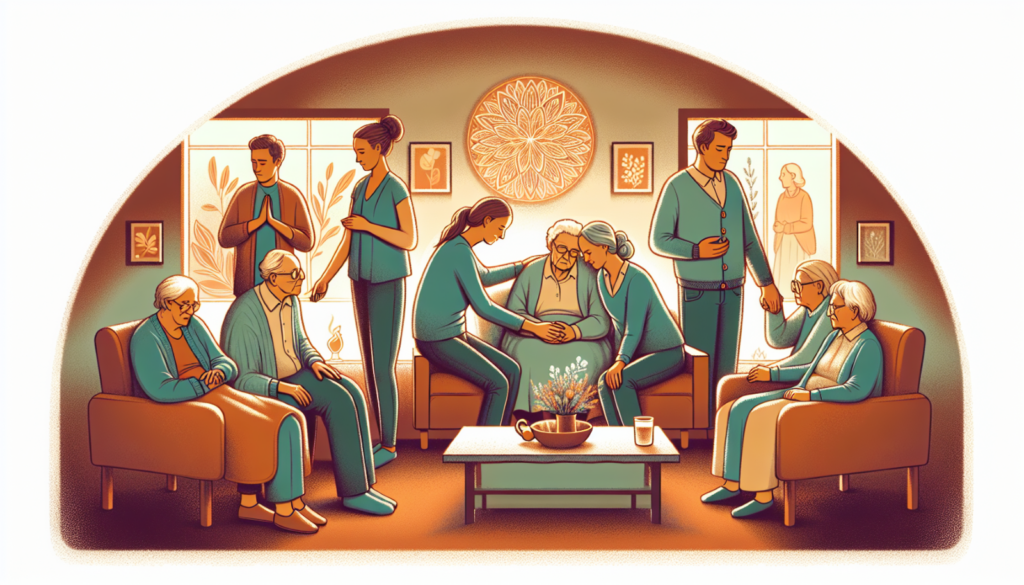
Having clarified these common misconceptions about hospice, we now turn our attention to the often unseen heroes - the hospice interdisciplinary team. This team, composed of various professionals, works together to provide comprehensive, holistic care to patients and their families.
These professionals range from:
registered nurses managing pain
certified nursing assistants providing personal care
social workers offering emotional support
chaplains offering spiritual support
They work in unison, aiming to relieve not only the physical symptoms of the patient but also provide psychological and social support to enhance the well-being of both the patient and their family.
Medical Professionals: Pain and Symptom Management
At the forefront of the hospice interdisciplinary team are the medical professionals, including the patient’s own doctor. Their role? Ensuring the patient’s comfort and quality of life by actively managing their pain and symptoms.
A hospice physician and nurses are specially trained in end-of-life pain and symptom management. They employ a comprehensive approach to pain management, which includes both medications and non-medicinal practices such as relaxation techniques and massage. Through this, they ensure that patients maintain the highest quality of life possible despite their terminal diagnosis.
Emotional Support: Social Workers and Counselors
In the realm of emotional support, social workers and counselors play a crucial role. As advocates, they offer supportive counseling to help patients and their families cope with the emotional challenges brought about by late-stage illnesses.
Beyond just counseling, social workers also connect families with local services and resources, providing crucial support during end-of-life care. Through their efforts, they not only aid the patient but also alleviate the feelings of helplessness that family members often experience, promoting psychological health.
Spiritual Guidance: Chaplains and Spiritual Advisors
Last but certainly not least, the spiritual aspect of hospice care. This is where chaplains and spiritual advisors come into the picture. Their role is to provide spiritual care that respects the patient’s belief system, ensuring their spiritual needs are met, whether they’re religious or non-religious.
Chaplains offer multifaith support and spiritually-customized care that aligns with the personal beliefs and preferences of the patient. They can guide patients and their families through emotional conflicts and end-of-life rituals that hold personal meaning, offering comfort and closure.
Hospice Care Settings: Meeting Patients Where They Are
Having introduced the team behind hospice care, we’ll now examine the various settings where this care takes place. Hospice care is flexible and can be provided in various settings that best suit the needs and wishes of each individual patient.
Patients can receive hospice care in the following settings:
Their own homes
Long-term care facilities such as nursing homes
Hospital-based hospice units
Assisted living facilities
This flexibility allows patients to receive care in familiar and comfortable environments, meeting them where they are and ensuring their utmost comfort.
Home-Based Hospice Care
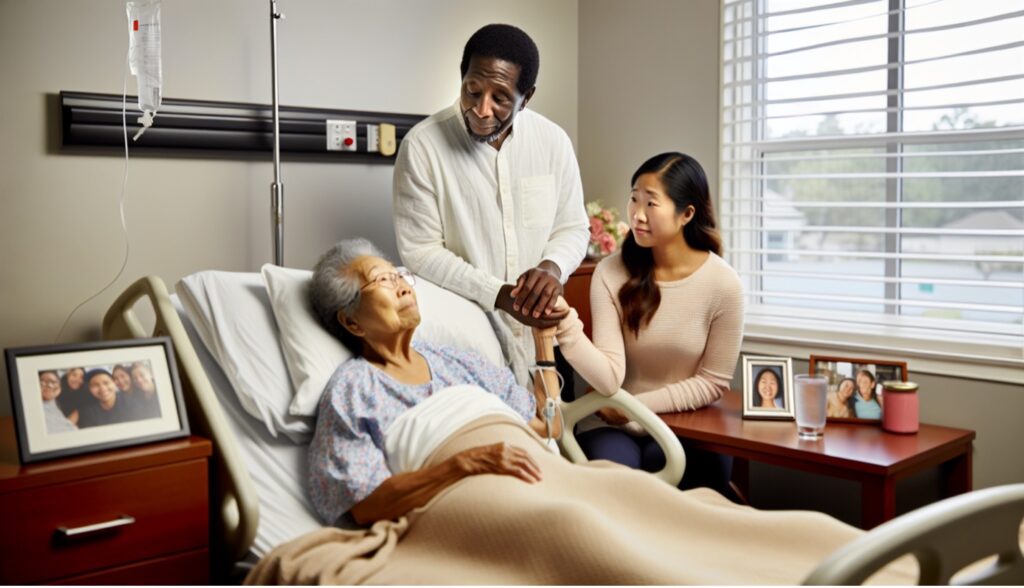
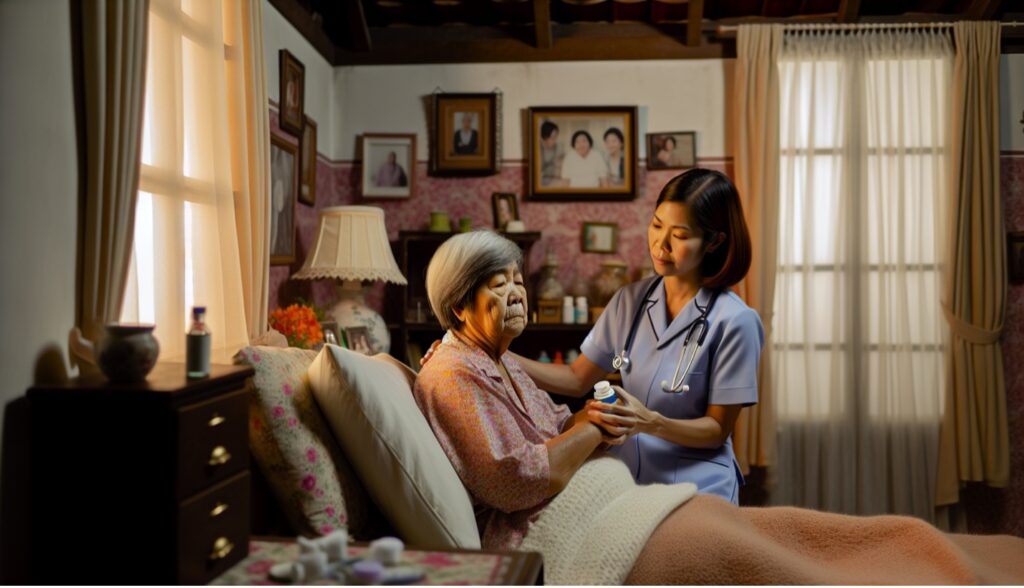
One of the most common settings for hospice care is the patient’s own home. Home-based hospice care allows patients to remain in a familiar and comfortable environment, with the involvement of family and friends in daily care.
The hospice care team supports the patient’s care at home by providing regular visits and being available for consultations via phone 24/7. This setting provides a level of personal comfort that can greatly enhance the patient’s quality of life during their final days.
Assisted Living Facility and Nursing Home Hospice Care
Hospice care can also be provided in assisted living facilities and nursing homes. Here, hospice services integrate seamlessly with the existing care plans provided to residents, offering specialized support beyond what is covered by general medical services.
Through expert care and support, the partnership between hospice services and long-term care facilities significantly enhances the quality of life and comfort for residents at the end of their lives. It’s about making a home away from home as comfortable and supportive as possible.
Hospital-Based Hospice Care
Hospital-based hospice programs are another option, offering intensive medical and psychological support within the hospital setting. These specialized services are designed to meet the needs of terminally ill patients who require a higher level of medical attention.
This setting offers a unique blend of the hospital’s resources and the holistic approach of hospice care. It ensures the patient’s medical needs are met while also addressing their emotional and psychological needs, providing a comprehensive support system during their final journey.
Financial Aspects of Hospice Care: Debunking Cost Myths
Now, let’s tackle a major obstacle that often hinders people from considering hospice care - the financial implications. Many perceive hospice care as prohibitively expensive, creating a significant barrier to access. But is this really the case?
The truth is, hospice care is often more affordable than many realize. Coverage is available through various sources, including:
Medicare
Medicaid
Private insurance
Community-based resources
Let’s delve deeper into these financial aspects and debunk the cost myths surrounding hospice care.
Medicare and Medicaid Coverage
A significant portion of hospice care costs is covered by Medicare and Medicaid for eligible patients. Both these programs offer a fully funded hospice benefit that provides substantial support. To qualify for these benefits, individuals need to meet certain requirements, such as having a terminal illness expectancy of six months or less and electing to receive hospice benefits instead of curative treatments.
These programs cover a comprehensive list of services for hospice care, including:
Nursing care
Medical equipment
Medical supplies
Drugs for symptom management
Support services like therapy and counseling
They ensure that patients can access the medical care they need without worrying about the financial burden.
Private Insurance Coverage
In addition to Medicare and Medicaid, many private insurance companies include coverage for hospice care in their plans. This expands the accessibility of these services for insured individuals, making hospice care an affordable option for a wider range of people.
Community-Based Support and Resources
For those without insurance or facing economic hardships, community-based support and resources can provide a lifeline. Public donations and local community organizations often offer financial aid specifically targeted at assisting those in affording hospice care.
These community-based resources play a crucial role in ensuring that hospice care is accessible to all, regardless of their financial situation. It’s another testament to the collective effort of the community towards making end-of-life care as comfortable and dignified as possible.
The Impact of Hospice Care: Beyond the Myths
Having debunked common misconceptions and delved into the workings of hospice care, let’s now turn to its impact. Beyond the myths and misconceptions, hospice care has a profound impact on patients and families, improving their quality of life and providing much-needed support during a challenging time.
We’ll examine the impact of hospice care by homing in on three main aspects - better quality of life, potential for extended life expectancy, and satisfaction among family members. Each of these aspects paints a picture of the real value of hospice care, showing how it goes beyond the myths to make a real difference in people’s lives.
Improved Quality of Life
Hospice care aims to improve the quality of life for patients with terminal illnesses by providing support and pain management. This specialized care focuses on meeting the physical, emotional, and spiritual needs of individuals in their final stages of life. It aims to allow patients to live fully despite their diagnosis, focusing on comfort and quality of life.
To achieve this, hospice care employs a comprehensive approach to pain management. This includes both medicinal practices and non-medicinal techniques like relaxation techniques and massage. It’s a testament to the commitment of hospice care to patient comfort and quality of life.
Extended Life Expectancy
While hospice care primarily focuses on comfort and quality of life, research indicates that it may also prolong life for patients with certain conditions, including pancreatic cancer, lung cancer, and congestive heart failure.
These findings highlight the potential of hospice care in not just improving the quality of life, but also in potentially extending it. They underscore the invaluable role of hospice care in providing support during end-of-life care.
Family Satisfaction and Support
Family satisfaction with hospice care is often influenced by factors like communication, support, and staff performance. A study in Sweden showed that 87.1% of family members of deceased individuals were satisfied with the hospice care provided. This satisfaction is a testament to the comprehensive support hospice care provides, not just to patients, but also to their families, ensuring they’re not alone during this challenging time.
Summary
We embarked on this journey with a cloud of myths surrounding hospice care. But as we delved deeper, we discovered the truth - hospice care is a compassionate service dedicated to providing comfort, dignity, and support during life’s final journey. It’s not limited to a place or a specific group of patients, nor does it signify giving up. Instead, it’s a holistic approach to end-of-life care, focusing on the physical, emotional, and spiritual well-being of patients and their families. So, let’s keep dispelling these myths and spread the truth about hospice care, making it more accessible to those who need it the most.
Frequently Asked Questions
Is hospice care only available in specific facilities?
No, hospice care can be provided in different settings such as a patient's home, an assisted living facility, a nursing home, or a hospital. Hospice care is not limited to specific facilities.
Does choosing hospice care mean I'm giving up?
Choosing hospice care does not mean giving up; it actually focuses on improving the quality of life and making patients as comfortable as possible during their remaining days.
Is hospice care only for cancer patients?
No, hospice care is not only for cancer patients, it also includes support for individuals with conditions like heart failure, COPD, and dementia.
Is hospice care expensive?
Hospice care is often more affordable than many realize, as it is covered by Medicare, Medicaid, and many private insurance plans. There are also community-based resources available for those without insurance or facing economic hardships.
Can hospice care extend a patient's life?
Yes, hospice care has been shown to extend the lives of patients with specific conditions such as pancreatic cancer, lung cancer, and congestive heart failure.
If you or your loved ones are in need of our compassionate services, we’re here for you! For more information, please contact us at 📞 760.431.4100
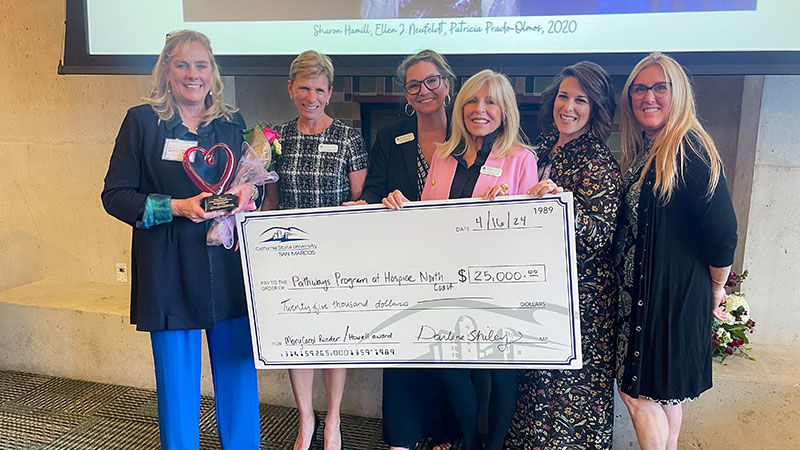
We are thrilled to announce that the Scripps Outpatient Palliative Care Team has selected Hospice of the North Coast’s Pathways Palliative Care Program to receive a generous $25,000 grant via the CSU Shiley Haynes Institute for Palliative Care. This grant will significantly enhance our ability to support individuals with serious illnesses, ensuring they receive the compassionate care and dignity they deserve.
Uniting for Change
Our Pathways Palliative Care Program is dedicated to empowering individuals facing serious illnesses. We provide comprehensive support through compassionate discussions and tailored care plans that address the unique needs of each person. This grant enables us to further our mission, expanding our reach and impact within the community.
How We Make a Difference
Compassionate Discussions: We engage in meaningful conversations with patients and their families, helping them navigate complex medical decisions with clarity and empathy.
Comprehensive Support: Our multidisciplinary team offers medical, emotional, and spiritual support, ensuring a holistic approach to care.
Dignity and Respect: Every individual is treated with the utmost respect, honoring their values and preferences throughout their care journey.
Join Us in Making a Difference
Your support and involvement can help us continue to provide exceptional care to those in need.
To learn more about our Pathways Palliative Care Program or to get involved
On this Memorial Day, we not only remember the fallen heroes who gave their lives for our freedom but also honor the veterans who are still with us, especially those needing assistance. Hospice of the North Coast extends our heartfelt gratitude to the brave men and women who have served our country. Your sacrifice is a beacon of courage and dedication that illuminates the path of freedom we walk upon. We honor you and the families who have endured the deepest loss with unwavering grace.
In tribute to our fallen veterans, we share the poignant words of John McCrae’s timeless poem, "In Flanders Fields":
In Flanders fields the poppies blow Between the crosses, row on row, That mark our place; and in the sky The larks, still bravely singing, fly Scarce heard amid the guns below. We are the Dead. Short days ago We lived, felt dawn, saw sunset glow, Loved and were loved, and now we lie In Flanders fields. Take up our quarrel with the foe: To you from failing hands we throw The torch; be yours to hold it high. If ye break faith with us who die We shall not sleep, though poppies grow In Flanders fields.
Please join us in our mission to support those who have served our country. Learn more about our We Honor Veterans Program and help spread our message of care and gratitude.
With sincere gratitude, Hospice of the North Coast
As we reflect on the profound sacrifices made by these heroes, we invite you to join us in honoring their memory through a contribution to Hospice of the North Coast. Your generous donation will enable us to continue providing compassionate care and support to veterans and their families, ensuring their stories and sacrifices are never forgotten.
Entering the realm of hospice care often feels like navigating through a labyrinth of emotions, both challenging and poignant, for patients and their families alike. Within this delicate journey, hospice volunteers emerge as beacons of support, offering solace and companionship to those in need.
While the medical team at Hospice of the North Coast focuses on providing essential care, hospice volunteers extend their hands to offer a different kind of healing touch. From running errands to engaging in heartfelt conversations, these volunteers ensure that patients and their families feel enveloped in care and comfort throughout their end-of-life passage.
Yet, the essence of hospice volunteering transcends mere assistance; it is a profoundly rewarding experience for those who embark on this compassionate journey. Through their selfless dedication, volunteers weave threads of hope and warmth into the lives of others, leaving indelible marks of kindness and empathy.
In a recent conversation, Denise Segobiano graciously shared her journey as a volunteer at Hospice of the North Coast, crafting memory bears, shedding light on the profound impact of compassionate service.
HNC: “Please describe your experience as a volunteer for Hospice of the North Coast.” Denise: "My experience with Hospice of the North Coast as a volunteer has been rewarding. I have been able to use my inherited craft and sewing talent given to me by my mother, Bessie."
HNC:“What draws you to this kind of work?” Denise:"I think what draws me to this kind of work is just being able to give comfort to a family who is grieving for the loss of a family member because I can relate to what they are feeling, and I think it helps to have something of theirs always around, hence the reason why memory bears are made out of something that they used to wear."
HNC: “How long have you been volunteering with HNC” Denise: "It will be a year in June that I’ve been a volunteer for Hospice of the North Coast."
HNC: “What kind of impact has volunteering with Hospice of the North Coast had on you?” Denise:"The impact of volunteering for Hospice of the North Coast has just been rewarding. It helps me to be able to give back and do something for somebody else."
HNC: “Why do you choose this work specifically?” Denise:"I actually did not choose to be a volunteer. It was suggested to me by my daughter, Amanda, because she saw that sewing was helping me find an outlet in myhealing. So, when she suggested it, I thought, 'hey! I can do that!' If I help someone else in their healing process by doing something as easy as sewing a bear, I would do it. It may sound 'unselfish,' but, in actuality, I do it for selfish reasons."
HNC: “Is there anything else you would like to share with the community?” Denise:"I would suggest to anyone who has a talent that can be shared with the community, and at the same time help take focus off of their grief or pain, they should do it. I think it serves as a healing tool, and by volunteering your service, your talent, your knowledge, your experience is the best way to represent someone you’ve lost."
If you're looking for a way to give back to your community, consider becoming a hospice volunteer. Not only will you be providing a much-needed service, but you'll also be part of a compassionate and dedicated team helping those in some of the most difficult moments of their lives. 👉 Join a team that is compact in size, yet large in heart.
Palliative care provides comfort and improves quality of life for those with serious illnesses by addressing symptoms and supporting families. This article outlines what palliative care involves, who benefits from it, and how it fits within the broader healthcare spectrum.
Key Takeaways
Palliative care is a comprehensive, patient-centered approach designed to alleviate symptoms, improve quality of life, and reduce stress for patients at any stage of a serious illness, alongside curative treatments.
Unlike hospice care, which is for the terminally ill, palliative care is available at any point during an illness and involves a team of health specialists working collaboratively to address the patient’s physical, emotional, and spiritual needs.
Accessing palliative care can be done through various settings beyond hospitals, like home or outpatient clinics, and is covered by insurance plans, although it’s important to understand individual coverage.
Defining Palliative Care: A Comprehensive Approach
Compact in size yet large of heart, Hospice of the North Coast provides an array of programs and services to the terminally ill, their families and the community
Have you ever pondered the true meaning of palliative care? It is like a comforting blanket wrapped around patients with a serious illness, aimed at easing their symptoms and reducing stress. The goal is to improve the life of the patient and their family, making the journey through illness less daunting and more manageable. But who are the potential beneficiaries of this specialized medical care? Essentially, anyone with a serious, complex, progressive, or life-threatening illness, including children and adults.
Moreover, treatments aimed at curing or treating a disease can harmoniously coexist with palliative care. The uniqueness of palliative care lies in its patient-centric approach, focusing on both the patient’s needs and their prognosis. It acts as an ally to other treatments like chemotherapy and radiation, complementing the care provided by other medical professionals.
Rather than being a last resort, palliative care is an active component of a patient’s healthcare journey, providing indispensable support and relief during a serious illness.
The Role of Palliative Care in Serious Illness
Consider palliative care as a trustworthy friend guiding patients through the turbulent voyage of a serious illness. But how exactly does it help? It addresses the dual challenges of symptom management and pain alleviation. As the disease advances, palliative care steps in to alleviate physical discomfort and enhance the patient’s well-being, ensuring their journey is as comfortable as possible.
Beyond physical relief, palliative care also has a profound impact on the emotional terrain. It lessens the suffering of patients by effectively managing symptoms, which in turn improves the quality of life for patients and their families grappling with serious illness. By treating distressing symptoms, setting care goals, and coordinating care, palliative care helps patients navigate their illness with strength and dignity, improving their overall quality of life.
Palliative Care vs. Hospice Care
Although palliative care and hospice care might appear synonymous, they have unique roles within the healthcare field. Palliative care can be introduced at any stage of a serious illness, offering comfort and symptom management alongside other treatments. On the other hand, hospice care specifically caters to those nearing the end of life, focusing on managing pain and symptoms without pursuing curative treatments.
So, when does one qualify for hospice care? Hospice care steps in when:
a doctor confirms a terminal illness.
the patient is expected to live less than six months if the disease follows its normal course.
the patient or their family decides to halt curative treatments due to the burden of care or suffering.
While both palliative and hospice care aim to provide comfort and improve the quality of life, their timing and focus differ, offering tailored support based on the stage and severity of the illness.
Palliative Care Team: Who's Involved?
Compact in size yet large of heart, Hospice of the North Coast provides an array of programs and services to the terminally ill, their families and the community
While the journey through a serious illness can be daunting, it is not a path you must tread alone. A palliative care team is like a band of healthcare heroes, each with their unique superpower, working together to support both the patient and their family. This specially trained team is made up of doctors, nurses, and other specialists who collaborate to provide an extra layer of support, ensuring that the patient’s journey is as comfortable and dignified as possible.
A palliative care team is not a one-size-fits-all ensemble. It is a diverse group of healthcare providers. This team works in harmony, promoting compassion and teamwork to ensure the patient receives holistic care tailored to their unique needs.
Collaborative Care Approach
The allure of palliative care stems from its collective approach. It is like an orchestra, where each healthcare professional plays a unique instrument, and together they create a symphony of care for the patient. The team of palliative care specialists could consist of:
a general practitioner or family doctor
a nurse practitioner
nurses
social workers
chaplains
counselors
But how does this diverse team collaborate to guarantee optimal care for the patient? Through open communication, efficient systems, and a common goal: to support the patient and their loved ones. They take a holistic approach, setting care goals and working as a team to manage symptoms and improve the quality of life. Each team member brings their expertise to the table, ensuring that all aspects of the patient’s well-being are considered and addressed.
Supporting Family Members
Amidst the turmoil of a severe illness, family members frequently shoulder emotional strain and logistical hurdles. Palliative care does not overlook this vital aspect. It steps in to offer:
Emotional support
Help family members understand the disease process.
Provide resources for practical assistance, like assisting with household chores or respite care.
Palliative care teams stand by families, identifying those at risk for experiencing high levels of distress and providing them with the support they need. They also assist family caregivers by:
Balancing their roles
Offering outpatient geriatric evaluation and management
Prioritizing their well-being, ensuring they are not left to navigate this challenging journey alone.
When to Seek Palliative Care: Timing Matters
Compact in size yet large of heart, Hospice of the North Coast provides an array of programs and services to the terminally ill, their families and the community
In the realm of palliative care, timing holds paramount importance. Palliative care can be beneficial at any stage of a serious illness, and early intervention can help manage symptoms, improve quality of life, and assist with decision-making. It is best to consider palliative care as early as the time of diagnosis so that symptoms can be managed, quality of life can be improved, and the patient can receive help with decision-making. It is not advisable to wait until the disease worsens or the patient is near the end of life to connect them with palliative care.
By recognizing the need for palliative care early, patients can manage their symptoms more effectively, and palliative care improves quality of life.
Identifying the Need for Palliative Care
Recognizing the requirement for palliative care is as crucial as the care itself. Decisions about initiating palliative care are based on the patient’s needs, like relieving symptoms and reducing stress, rather than solely on the patient’s prognosis. It is for anyone, at any age, and at any stage of a serious illness, and can be provided alongside curative treatments.
Medical conditions can include serious illnesses like:
cancer
heart failure
lung diseases
kidney failure
dementia
HIV/AIDS
ALS
chronic liver disease
multiple sclerosis
Parkinson’s disease
These serious illnesses often necessitate palliative care. Recognizing the need for such care is the first step towards ensuring patients receive the comprehensive support they need.
Initiating Palliative Care Conversations
Transparent communication forms the bedrock of effective healthcare, a fact that holds especially true in palliative care. The topic of palliative care can often be difficult to broach due to fear, lack of knowledge, or the emotional burden associated with serious illness. However, initiating these conversations is crucial for ensuring that patients receive the care they need.
Communication about palliative care can start with understanding the patient’s needs and preferences, being honest about uncertainties, avoiding giving false hope, and facilitating dialogue between all parties involved. Patients and their families can request a referral for palliative care services and explore online directories and resources to find local palliative care providers.
The Many Benefits of Palliative Care
Compact in size yet large of heart, Hospice of the North Coast provides an array of programs and services to the terminally ill, their families and the community
The advantages of palliative care surpass the realm of medical management. It offers emotional support, working with loved ones, hearing patient stories, and providing counseling. It also provides practical assistance, such as help with managing healthcare costs and legal planning.
Pain management is a key aspect of palliative care. It employs a variety of methods, such as:
mindfulness
meditation
massage
aromatherapy
reflexology
hypnotherapy
By managing symptoms and reducing suffering, palliative care helps patients live full and meaningful lives, supporting them and their families through the challenges of illness and disease.
Emotional and Spiritual Support
The crux of palliative care lies in delivering emotional and spiritual support. Chaplains, social workers and counselors ensure that a patient’s beliefs and values are an integral part of their care plan. They respect religious or cultural practices and help patients find strength through spirituality and hope.
Palliative care teams are also equipped to support patients dealing with grief and fear. They provide emotional support, cater to the patients’ cultural, personal, and spiritual needs, and offer support for the patients’ families. By addressing these needs, they help patients face their illness with dignity and strength.
Practical Assistance
Another vital aspect of palliative care is the provision of practical assistance. It offers interdisciplinary support and resources, such as help with advance directives, making legal planning easier during a serious illness.
Managing the logistics of a serious illness can be overwhelming for patients and their families. Palliative care team’s step in to provide:
Services
Payment models
Care coordination
Extra support
This helps reduce stress and make the journey more manageable.
By offering care management advice, respite support, and help with learning how to care for the patient, palliative care teams ensure that families are not left to navigate this challenging journey alone.
Accessing Palliative Care: Where and How
Compact in size yet large of heart, Hospice of the North Coast provides an array of programs and services to the terminally ill, their families and the community
The scope of palliative care is not limited to the confines of a hospital. It can be accessed in various settings, including:
Nursing homes
Outpatient palliative care clinics
Specialized clinics
In the comfort of the patient’s home
As for the financial aspect, most private insurance plans, Medicare, and Medicaid usually cover palliative care services, making it financially accessible to many people.
If you or your loved ones are in need of our compassionate services, we're here for you! For more information, please contact us at 📞 760.431.4100 Or 🌐 Click here
Navigating Insurance Coverage
Comprehending the insurance coverage for palliative care services is vital for availing these services. Most private insurance plans, along with Medicare and Medicaid, usually cover palliative care services. However, it is essential to understand the specifics of coverage, as health plans might not cover some services typically included in hospice benefits. Insurance terms can also limit the scope of palliative care, such as the types of illnesses that qualify for it. It is advisable to check with your insurance provider to understand what is covered under your plan.
Connecting with Palliative Care Providers
Building a relationship with palliative care providers can be a straightforward process. The first step is to have a conversation with your regular doctor and express your interest in palliative care. They can provide a referral to palliative care services.
If your healthcare provider cannot give a referral, do not worry. Resources like GetPalliativeCare.org can help you find palliative care providers or feel free to give us a call, at 760.431.4100 and we will be delighted to assist with any inquiries you may have. With these resources and a bit of research, you can find the support you need to navigate your health journey.
Summary
Palliative care is a beacon of hope in the daunting journey of serious illness. It is a specialized medical approach that enhances the quality of life for patients and their families, providing relief from symptoms, stress, and the emotional toll of illness. With a dedicated team of healthcare professionals, palliative care offers a comprehensive approach that addresses physical, emotional, and spiritual needs. By initiating palliative care conversations early, understanding insurance coverage, and connecting with palliative care providers, patients and their families can navigate their healthcare journey with the support they need. Remember, in the face of serious illness, you are not alone - palliative care is here to help.
Frequently Asked Questions
What does it mean when someone is getting palliative care?
Palliative care is specialized medical care for people with a serious illness, aimed at providing relief from symptoms and improving quality of life for the patient and family. It focuses on managing pain and stress associated with the illness, while seeking treatment.
Does palliative mean end of life care?
No, palliative care is broader and can last for a longer duration than just the end of life. It does not necessarily mean that the person is close to death – they can receive palliative care for years.
What is the difference between palliative care and hospice care?
The main difference between palliative care and hospice care is that palliative care can be provided at any stage of a serious illness and while a patient is still choosing curative measures. Hospice care is specifically for those nearing the end of life and have decided to no longer seek aggressive treatment for terminal illness. Both focus on improving the quality of life.
When should one consider palliative care?
You should consider palliative care at any stage of a serious illness, and it is advisable to think about it as early as the time of diagnosis. Early consideration allows for better management of symptoms and holistic support. If you or your loved ones require compassionate palliative care services, we are here to help! For more information, please reach out to us at 📞 760.431.4100.