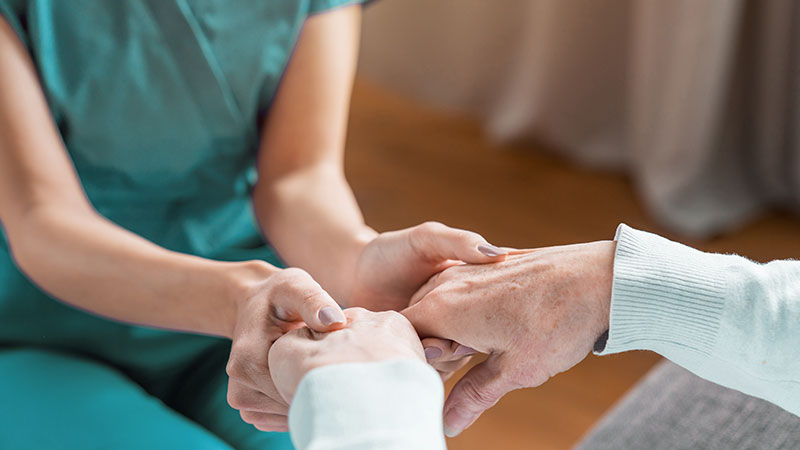
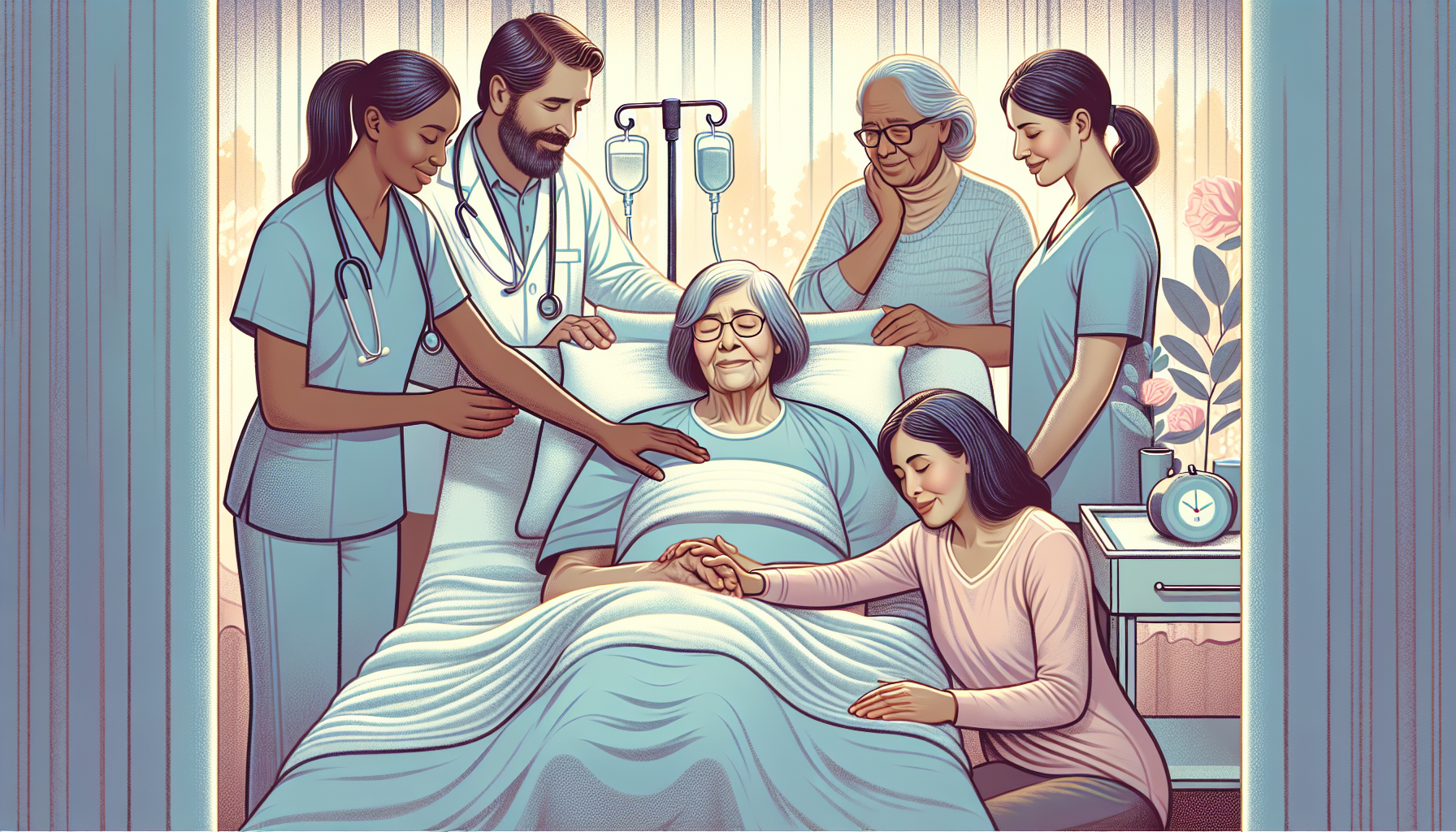
During September, two important observances highlight the compassionate care we offer at Hospice of the North Coast: National Pain Awareness Month and National Assisted Living Week, celebrated from September 8-14, 2024. Both of these events underscore our mission of providing comfort, dignity, and personalized care to individuals and families in their most vulnerable times.
Pain Awareness Month: A Focus on Comfort in Hospice Care
At Hospice of the North Coast, we recognize that pain management is an essential aspect of hospice care. For many patients, physical pain can be one of the most challenging aspects of living with a life-limiting illness. That's why, during Pain Awareness Month, we emphasize the importance of effective pain relief and symptom management.
Our interdisciplinary team collaborates with patients, families, and caregivers to create tailored pain management plans. These plans address not only physical pain but also the emotional and spiritual distress that can accompany serious illness. From medication and alternative therapies like massage or pet therapy to psychological support, we ensure that our patients experience the highest quality of life possible, even in the face of serious illness.
National Assisted Living Week: Inspiring Generations Through Compassionate Care
This year’s National Assisted Living Week (September 8-14, 2024) is themed "Inspiring Generations." This theme holds special meaning for us at Hospice of the North Coast as we continue to support individuals and their families across multiple generations.
Assisted living facilities play a crucial role in the care continuum for seniors and individuals with disabilities, and our partnership with these facilities is vital in providing holistic care. During this week, we celebrate the dedication of caregivers and the intergenerational bonds that are forged in assisted living communities. Whether it's a grandparent passing down wisdom to their grandchildren or caregivers providing a compassionate presence, these relationships enrich the lives of everyone involved.
The Role of Hospice in Assisted Living
Hospice of the North Coast works hand-in-hand with assisted living facilities to ensure that residents receive the appropriate level of care as their needs evolve. We provide specialized end-of-life care that focuses on managing pain and other symptoms, allowing individuals to live their final days with dignity and comfort in familiar surroundings.
The Inspiring Generations theme also highlights the role that families play in the care journey. At Hospice of the North Coast, we believe in empowering families to take an active role in decision-making, honoring the unique wishes of each patient. This is reflected in our philosophy of "Your Life. Your Choice. Your Way."—a guiding principle that emphasizes the importance of choice and autonomy in hospice care.
A Unified Approach to Care
The observance of Pain Awareness Month and National Assisted Living Week serves as a reminder of the importance of compassion, comfort, and collaboration in healthcare. Whether managing chronic pain or ensuring that loved ones receive dignified care in their final days, Hospice of the North Coast is committed to supporting patients and their families every step of the way.
We invite you to join us in raising awareness about pain management and celebrating the generations of individuals who inspire us with their courage, strength, and stories. Together, we can ensure that every individual receives the care they deserve, free from unnecessary pain and surrounded by love and support.
For individuals and families seeking compassionate care and support for their loved ones, Hospice of the North Coast is here to guide you through every step of the journey. To learn more about how we can provide comfort, dignity, and personalized care, please contact us today.
For assisted living facilities and healthcare partners interested in collaborating with Hospice of the North Coast to deliver comprehensive hospice services and enhance patient care, we welcome the opportunity to work together. Reach out to us to explore how we can support your facility and your residents.
Mary opted for palliative care, finding comfort and control with Hospice’s ongoing support at home.
Meet Mary (fictitious name). Mary has COPD, a chronic illness that she’s been living with for several years. Following multiple hospitalizations, Mary was referred to Hospice of the North Coast and admitted into hospice care. However, after only a few days she decided she wanted something different from hospice care. She wanted the option to explore possible treatments and didn’t want to be restricted from seeing medical providers, even if that meant returning to the hospital.
For this reason, Mary came off hospice care and enrolled in Hospice of the North Coast’s palliative care program, where she receives regular visits from a palliative care nurse along with expert guidance. We respect Mary’s decision, and we are committed to helping her take charge of her own healthcare journey. Mary is currently getting the care and support she needs to manage her illness, and she knows that if she needs anything we are only a phone call away. With this extra layer of support and communication, Mary feels comforted and comfortable that she does not need emergency care.
Over the past year Mary’s COPD has progressed to a point of requiring continuous oxygen. She is now talking about not wanting medical interventions and is questioning what that change would look like for her. But she is not there yet, and she continues calling her own shots. Mary’s goal was to be comfortable in her own home and to reduce rehospitalizations. Through the Pathways Palliative Care program, Hospice of the North Coast has helped her achieve this goal.
Mary’s story highlights the importance of choosing the right care for your journey. If you or a loved one is seeking comfort, dignity, and expert support, Hospice of the North Coast is here to help. Reach out today to learn more about our palliative care program and how we can assist in making the best decision for your health and well-being. Your comfort and peace of mind are our top priorities.
As a 501(c)(3) nonprofit agency since 1980, we rely on the generosity of our community to continue our mission. Consider making a donation today. Your support allows us to provide compassionate care to more individuals like Mary, ensuring they have the support they need during life’s most challenging moments. Every contribution makes a difference.
We are thrilled to announce that Hospice of the North Coast has been honored as the Best in Hospice Care for the second consecutive year in The Best of North County 2024 awards! This remarkable achievement has earned us the prestigious Gold Medal for the second time, and we couldn't be more grateful.
A Heartfelt Thank You to Our Community
This recognition is a testament to the unwavering trust and support from the North County San Diego community. Your votes and confidence in our services inspire us to continually strive for excellence in providing compassionate and comprehensive hospice care.
Our Commitment to Excellence
At Hospice of the North Coast, our mission is to enhance the quality of life for our patients and their families through exceptional care and support. This award reinforces our commitment to this mission and motivates us to keep pushing the boundaries of what is possible in hospice care.
What Makes Us Stand Out
Our dedicated team of professionals is at the heart of our success. Their compassion, expertise, and unwavering dedication ensure that every patient receives personalized care that meets their unique needs. Whether it’s managing pain, providing emotional support, or offering grief counseling, our team goes above and beyond to make a difference in the lives of those we serve.
Looking Forward
As we celebrate this incredible achievement, we also look ahead with renewed determination. We are committed to continuing our work with the same passion and dedication that has brought us this far. Our goal is to remain at the forefront of hospice care, always prioritizing the well-being of our patients and their families.
Join Us in Celebrating
We invite you to join us in celebrating this milestone. Your support and belief in our mission are what make awards like this possible. Follow us on social media to stay updated on our latest news, events, and ways you can get involved.
Thank you, North County San Diego, for your trust and support. Together, we are making a difference in the lives of those who need it most.
Have questions about hospice and palliative care? We have answers. Give us a call 📞 760.431.4100
We are honored to share that Hospice of the North Coast has been featured in a article by Katherine I. Pettus, PhD, titled "Up Close & Personal: Caregiving for My Sister with a Brain Tumor." Published by the International Association for Hospice & Palliative Care (IAHPC), this heartfelt piece highlights the exceptional care and support we provide to patients and their families during some of the most challenging times. Read article below:
Up Close & Personal: Caregiving for my sister with a brain tumor
By Katherine I. Pettus, PhD IAHPC Senior Director of Advocacy & Partnerships
The new IAHPC online course, Palliative Care in Neurological Conditions, cosponsored with the International Neuropalliative Care Society (INPCS), is a unique, eye-opening offering that features engaging lectures by leading senior clinicians followed by compelling interviews with neuropalliative patients and caregivers.
As I write this, I am caregiving for my older sister Lisa who, having been diagnosed with advanced glioblastoma in April, was given a prognosis of two to three months maximum with no treatment. Having seen another family member go through surgery, chemo, and radiation for the same type of tumor, Lisa opted for palliative care and hospice rather than possible futile and debilitating treatment. A wise decision. Lisa and her son engaged Hospice of the North Coast in Carlsbad, CA, which provides full-service home care and in-patient respite and symptom control when necessary.
Unexpected gains, but swift change is possible
Since Lisa wanted to stay at home, I flew to San Diego from Toronto after the Canadian Bishop’s Conference to make good on my promise to care for her whenever she needed me. So far, Lisa has outlived her prognosis, and after one seizure two weeks ago when we thought we’d lost her, she rallied and is now back to eating on her own, walking up and down steps with help, and performing most activities of daily living (ADLs) with minimal support. That said, one thing I have learned from the first three modules of the new course is that things can change in a heartbeat, and the best directive is to make the most of every moment.
Family caregiving is a tough row to hoe, even with great hospice support and home health aides for a few hours each day. It is also a grace and a privilege I would recommend to anyone who has the opportunity to do it. It is important to have some training (I am a trained hospice volunteer) and to have as much information about “your” patient's condition as possible. That’s one reason why the new course includes caregivers themselves as active participants, and why IAHPC will be offering a caregiver course that kicks off in October on the International Day of Care and Support.
Current course on neuropalliative care helps caregivers like me
Having also spent several years caregiving for my younger sister, who died of a different kind of brain tumor just over three years ago, I wish I had known all the symptom management information I gleaned from Jessica Besbris, director of neuropalliative care at Cedars-Sinai Medical Center, who gave Module 3 of the new course. Module 1, on neuropalliative care for children, featured a lecture by Audrey Foster-Barber, professor of child neurology at University of California San Francisco, and interviews with two mothers of children with palliative care conditions, who advocated for more patient- and caregiver-centered approaches throughout diagnosis, treatment, care, and bereavement. Many of the anti-seizure medications Dr. Foster-Barber recommended, which are controlled under international law, are unavailable in lower- and middle-income countries. This is an important area for IAHPC advocacy at the Commission on Narcotic Drugs in Vienna.
Module 2, "Palliative Care for Persons with Multiple Sclerosis", featured a lecture by Simone Veronese, head of research at Fondazione FARO ETS in Turin, Italy, and an interview with Charles White, an African-American man with multiple sclerosis. Mr. White spoke about the structural racism and disrespect he encountered in the New York health system as an MS patient until he found an African-American primary care physician and was hired by the University of Rochester Medical School to start a community outreach program on brain health. There is a huge amount of advocacy and building awareness to be done in this domain of palliative care: we look forward to supporting these needs, upon request.
I will moderate Module 4, “Neuropalliative and Spiritual Care in Alzheimer's Disease and Related Disorders in Low Resource Settings,” featuring Richard Bauer, a chaplain known to many for his work with PallChase, and Mataa Moses Mataa, a Zambian palliative care physician and neurologist who founded Alzheimer’s Disease and Related Dementias in Zambia in 2023. Fr. Bauer and Dr. Mataa will be joined by two caregivers of persons with Alzheimer’s from the African continent.
The course is free for IAHPC and INPCS members; please consider joining or renewing your membership to watch the first three modules and catch the remaining four live sessions, all of which include an online Q & A.
When faced with serious illness, understanding the distinction between palliative care vs hospice care is essential. Palliative care focuses on improving quality of life for patients at any illness stage, providing symptom relief alongside curative treatments. Hospice care, however, is specific to those with a life expectancy of six months or less, emphasizing comfort and quality of life without pursuing curative measures. This article will explore these differences in depth, guiding you through the goals, eligibility, and settings where each care type is provided.
Key Takeaways
Palliative care is available from diagnosis, focusing on enhancing quality of life and managing symptoms alongside curative treatment, whereas hospice care is for those with a life expectancy of six months or less, prioritizing comfort and quality of life in the final stages.
Eligibility for palliative care is based on having a serious illness regardless of the stage, while hospice care requires a doctor’s prognosis of six months or less to live, with a focus shifting entirely to comfort care.
Both palliative and hospice care are supported by interdisciplinary teams and can be covered by Medicare, Medicaid, and some private insurances, with the key difference being that palliative care can coexist with curative treatments while hospice care signifies a cessation of curative efforts.
Defining Palliative Care and Hospice Care
Understanding care options becomes crucial when confronting a serious illness. From the moment of diagnosis, palliative care provides hope by focusing on:
Quality of life enhancement
Symptom management
Psychological support
Spiritual support
In contrast, hospice care offers:
A sanctuary for those nearing the end of life
Prioritization of comfort over cure
A holistic approach to embrace the final chapters of life with dignity and peace.
Palliative Care: Goals and Treatment
Palliative care’s essence lies in its ability to integrate with curative treatments, enabling patients to manage symptoms assertively while exploring treatment options for their illnesses. With a multidisciplinary team in tow, palliative care envelops patients and their families in a cocoon of comprehensive support, addressing physical discomfort, emotional turmoil, and the quest for meaning in the face of adversity.
This care model is adaptable, adjusting to patients’ changing needs as they traverse the challenging landscape of severe ailments.
Hospice Care: Goals and Treatment
Moving to hospice care represents a significant shift in focus, centered on providing a comforting sanctuary to ensure the remaining time is lived to its fullest potential. Hospice care focuses on families finding solace in the approach, often reporting greater satisfaction with the attention to pain management and the reduction of unnecessary medical interventions, which underscores the meaningful care provided.
The cessation of curative treatment, a form of medical treatment, marks a patient’s entry into hospice due to a terminal illness, commencing a journey that is supported at home by a compassionate hospice team focused on easing pain and providing symptom relief, uplifting spirits.
Eligibility Criteria for Palliative Care and Hospice Care
Understanding the eligibility criteria for palliative and hospice care is like learning about the entryways to diverse gardens of care; one accessible to all with serious illnesses, and the other designated for those approaching life’s end. Palliative care embraces patients at any stage of a serious illness, offering its services in tandem with curative treatments.
Hospice care, however, is a refuge for those with a life expectancy of six months or less, a threshold set by medical prognostication, beyond which the focus shifts entirely to comfort within a hospice program.
Palliative Care Eligibility
Palliative care, provided by a palliative care organization, is limitless in terms of disease stage or time; it is accessible from the diagnosis of a serious illness, embracing palliative care patients irrespective of their age or condition. This compassionate form of care coexists with curative treatments, offering palliative care services as a supportive backdrop for those facing life-altering, long-term illnesses.
Hospice Care Eligibility
Hospice care has a distinct threshold, necessitating a doctor’s recommendation and the prediction of a life expectancy of six months or less, assuming the illness follows its typical trajectory. Criteria for hospice care extend beyond prognosis to include clinical indicators, painting a picture of the patient’s health trajectory and guiding the transition to end-of-life care.
Comparing Care Settings: Where are Palliative and Hospice Care Provided?
The environments where palliative and hospice care are provided vary as much as the patients’ needs. Palliative care casts a wide net across healthcare environments, including:
Hospitals
Outpatient clinics
Nursing homes
Rehabilitation centers
Home care settings
This ensures that support is always within reach for patients in need.
Conversely, hospice care often finds its home within the comforting embrace of the patient’s own residence, though it too can grace various facilities when needed.
Palliative Care Settings
From the busy hospital corridors to the quiet rooms of a nursing home, palliative care adjusts to the patient’s environment, guaranteeing unrestricted support. This flexibility ensures that patients can receive palliative care where it is most beneficial, aligning with their daily lives and individual needs.
Hospice Care Settings
Although hospice care is versatile, it is most commonly provided in the patient’s home, creating a safe haven where family and friends provide daily care under professional guidance.
For those in hospitals or living facilities, transitioning to home hospice care involves a thorough planning process to ensure the right support and resources are in place to maintain comfort and dignity.
Care Teams: Who Provides Palliative and Hospice Care?
Each care plan, whether palliative or hospice, is supported by a team of dedicated professionals who bring their expertise to the bedside, creating a symphony of support. These interdisciplinary teams are the backbone of both palliative and hospice care, ensuring patients and their families receive holistic care through every step of their journey.
Palliative Care Team Members
The palliative care team is a mosaic of healthcare professionals, including doctors, nurses, and specialists, all harmonizing their efforts to provide the most comprehensive care possible. Social workers, nutritionists, and chaplains add nuanced notes of emotional and spiritual support to the patient’s care melody, ensuring every aspect of their well-being is addressed.
Hospice Care Team Members
The hospice team mirrors a family, with nurses, doctors, and social workers forming its core, providing medical care and emotional support throughout the end-of-life journey. Hospice aides and volunteers bring additional layers of care, assisting with daily activities and offering companionship, enhancing the quality of life for hospice patients.
Insurance Coverage for Palliative and Hospice Care
Like any healthcare service, it’s vital to understand the insurance coverage for palliative and hospice care. Both Medicare and private insurance plans may shoulder the financial burden, but the coverage details can vary widely depending on the specific policy and patient situation.
Palliative Care Insurance Coverage
Medicare Part A and B, along with Medicaid and certain private insurance plans, often provide coverage for palliative care, reflecting its importance in the continuum of care for those with serious illnesses. This financial support enables patients to access the necessary treatments and services without the added stress of out-of-pocket expenses.
Hospice Care Insurance Coverage
Medicare offers comprehensive coverage for hospice care, with certain conditions and exceptions, and many private insurance plans also include hospice benefits. This coverage extends to medications and other necessary services, ensuring that the focus remains on patient comfort and symptom management.
Transitioning from Palliative Care to Hospice Care
Transitioning from palliative to hospice care marks a significant milestone, characterized by an intensified commitment to comfort and quality of life as a patient nears their journey’s end. This process involves careful assessment, open communication, and the alignment of care goals with the patient’s values and preferences.
Assessing the Need for Transition
Evaluating the transition to hospice care involves understanding a patient’s deteriorating health, potential treatments, and respecting their care preferences. Open and early conversations about end-of-life care wishes are crucial for preparing patients and their families for the transition, ensuring their values guide the care decisions.
Navigating the Transition Process
The transition from palliative to hospice care is a journey characterized by:
empathy and respect for the patient’s care preferences and life aspirations
shared decision-making as the compass guiding the journey
ensuring that every step taken honors the patient’s wishes and provides the support they need
Summary
Through the tapestry of care woven by palliative and hospice services, patients and their families find a refuge of support, comfort, and dignity at each stage of a serious illness. Understanding the nuances between these two compassionate care models empowers individuals to make informed decisions, ensuring meaningful care aligns with their values and wishes at the end of life.
Frequently Asked Questions
Is palliative care end-of-life care?
No, palliative care is not the same as end-of-life care. While it can include end-of-life care, palliative care is broader and can last for a long time, and having palliative care doesn't necessarily mean that a person is likely to die soon.
What are the 3 forms of palliative care?
The three main forms of palliative care are physical, psychological, and spiritual, each playing a significant role in a patient's treatment.
What is the difference between a hospice and palliative care?
In summary, palliative care aims to maintain quality of life while managing treatment, while hospice care is specifically focused on the period closest to death. Both are centered around the patient's needs.
Can palliative care be received at home?
Yes, palliative care can be provided at home, among other settings, to suit the patient's individual needs.
Does Medicare cover hospice care costs?
Yes, Medicare generally covers all hospice care costs, with some exceptions such as certain outpatient drug copayments and inpatient respite care copayments.
If you or your loved ones are in need of our compassionate services, we’re here for you! For more information, please contact us at 📞 760.431.4100