Hospice nurses help bring dignity and compassion to those who are suffering from a terminal illness. They provide comfort and care during a difficult time, helping patients manage their pain and preserve their quality of life. It’s a unique type of nursing that requires special skills and an understanding of the emotional challenges that come with end-of-life care. Here are six reasons to consider a career as a hospice nurse:
Flexibility: It is possible to work in many different settings, from hospitals and nursing homes to private residences and assisted living facilities. The type of schedule can also be tailored to fit your needs—you may choose full-time, part-time, night shifts, or weekend hours.
Patient Focus: As a hospice nurse, your primary focus is on the patient and their family. You’ll be providing more than just medical care; you’ll be offering emotional support and guidance during this difficult time.
Professional Growth: Working with terminally ill patients can be a rewarding experience; you’ll gain valuable insights and skills that are applicable to any nursing career.
Work/Life Balance: Hospice nurses often have more flexible hours than those in other specializations, so you can better manage your workload and still have time for family, friends, and leisure activities.
Professional Support: Working in hospice care comes with its own unique challenges, which is why you’ll find plenty of support from colleagues and professional organizations. This includes access to continuing education courses and resources to help you stay up-to-date on the latest advancements in end-of-life care.
Job Satisfaction: Few things can compare to the feeling of making a real difference in someone’s life, especially when they are facing tough circumstances. As a hospice nurse, you’ll find great satisfaction in bringing peace and comfort to those in your care.
Choosing a career as a hospice nurse is a meaningful and rewarding experience. From the flexibility of working in different settings to the job satisfaction that comes from making a real impact, it’s easy to see why so many nurses choose to specialize in hospice care. If you’re looking for a career that will bring joy, fulfillment, and personal growth, consider becoming a hospice nurse today.
Compassionate care makes all the difference at end-of-life. Discover career opportunities and join our mission. 43 years strong! We're looking for RNs and LVNs to join our award-winning team! We offer: ➡️ Competitive wages ➡️ Generous PTO ➡️ 100% company-paid dental, vision, and medical ➡️ 110% 401K match up to 6% ➡️ 2% pay increase for their CHPN at the company expense ➡️ And more!
Apply online: Click Here and we'll contact you to further discuss the opportunity of joining Hospice of the North Coast family.
Hospice care can be a challenging and emotional experience for patients and their families. Hospice volunteers play a critical role in supporting patients and their loved ones during this time.
While nurses and medical professionals provide essential medical care, hospice volunteers offer companionship, emotional support, and practical assistance to patients and their families. From running errands to simply sitting and chatting with patients, volunteers help ensure that patients feel cared for and supported throughout their end-of-life journey.
But hospice volunteering isn't just about helping patients. It's also an incredibly rewarding experience for the volunteers themselves. By giving their time and energy to those in need, they're able to make a genuine difference in the lives of others.
We asked Cindy Outlaw about her volunteer experience at Hospice of the North Coast.
HNC: Please describe your experience as a volunteer for Hospice of the North Coast. Cindy: "I started at Hospice of the North Coast in March 2020 as a Bereavement Intern while I was in school to earn my Master’s degree in Marriage and Family Therapy. After graduating, I continued to offer bereavement counseling through the hospice to individuals, groups, and at Pacifica House. I recently helped start the Walking Through Grief group that meets on Thursday mornings in Carlsbad."
HNC: What draws you to this kind of work? Cindy: "I am honored to be allowed to go through the grieving process with individuals I have met through hospice. I appreciate being able to help bring peace and comfort to others during a very difficult time of life."
HNC: How long have you been volunteering with HNC? Cindy: "I just celebrated the end of my third year at Hospice of the North Coast."
HNC: What kind of impact has volunteering with Hospice of the North Coast had on you? Cindy: The work of bereavement counseling has made me a better listener than I was in the past. I have learned to more appreciate precious friends and family members as we walk through life together.
HNC: Why do you choose this work specifically? Cindy: "I can see the dramatic positive impact of bereavement counseling and I am so happy I get to be a part of that process. "
HNC: Is there anything else you would like to share with the community? Cindy: "I want to thank all those people who have touched my life at Hospice of the North Coast by sharing their stories with me.... stories of their lives and stories of their loved ones."
If you're looking for a way to give back to your community, consider becoming a hospice volunteer. Not only will you be providing a much-needed service, but you'll be part of a compassionate and dedicated team helping those in some of the most difficult moments of their lives. 👉 Join a team that is compact in size, yet large of heart
Hospice of the North Coast is blessed to have a thriving volunteer department assisting our patients and families in many ways. Our patient care and pet therapists see our patients wherever they call home. Also, bringing a presence of comfort, respite for caregiving family members, and friendship. We have volunteers dedicated to making Remember Me Bears, helping in the office, and sitting with patients without family/friends in their final hours. As a team, we dedicate ourselves to enhancing the quality of life at the end of life and do it with care, empathy, and respect. Our volunteers are the beautiful men and women of our community giving freely everything they can for our patients and their families.
There is no truer heart than that of a volunteer. There is no truer and more compassionate heart, than that of an HNC volunteer!
“Hospice to me means giving of myself to another at the end of life and in return having the honor of being a bright light at the their end journey. I get as much out of volunteering as I give. So for me, it’s a double blessing for myself and our patient.” ~ Kathleen Gordon
“Pretty amazing opportunity to realize the connectedness of the human experience. Proud and humbled to even be a small part in the HNC mission.” ~ JoAnn Landis
“Hospice has afforded me a great opportunity to volunteer and help those in my local community. I can visit on my own schedule while meeting some wonderful people who are transitioning on, who need a comforting, friendly visit.” ~ Chuck Gunderson
“Being a volunteer means connecting with another in a most special way – heart to heart.” ~ Ruby Kadota
“Volunteering my time to people at the end of their lives is a gift to me. It keeps me in the moment, makes me see the wonder of life and opens my heart to all beliefs and brings my life so much love.” ~ Vanessa Wolverton
“Big events can seem monumental to those experiencing first hand, but feel light to those on the outside. Helping a patient and family during this life change is a way I can give some sense of ease.” ~ John Morris
“I want to volunteer for hospice because I have natural gifts in compassion, empathy and a peaceful presence. I want to share these qualities with those in their time of transition and contribute to their comfort, love and need for presence.” ~ Danielle Walker
Every day is a new opportunity to make a difference. Whether you volunteer your time, donate to a cause, or simply spread kindness, you have the power to change lives.
As we age, we face limitations on what we can do, both physically and mentally. Maybe you’re confined indoors and have to say goodbye to hobbies that are simply too challenging. But if gardening is your life-long joy, you don’t have to give it up!
Gardening –– even indoors –– is proven to have numerous benefits for older adults. It increases physical activity and lowers depression. Getting your fingers in the dirt relieves stress and anxiety. Growing vegetables or flowers gives you a feeling of accomplishment. And having greenery inside your home provides beauty and cleaner air.
There are several ways to incorporate indoor gardens into your lifestyle. Here, we take a look at some of the easier choices.
Vertical Gardening
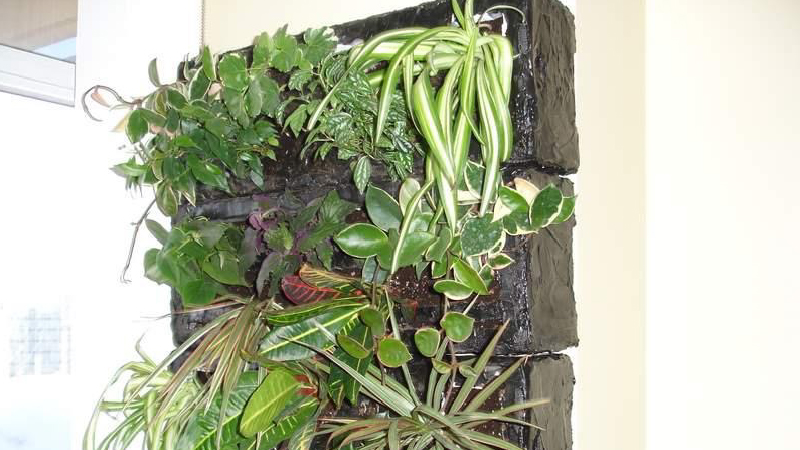
When you can’t go out, go up! These structures are perfect for seniors who aren’t as mobile as they used to be because they can be tended to with little effort.
As the name implies, vertical gardens work their way up, rather than out. They can be free-standing on shelves, attached to a wall, or woven through a trellis. This makes gardening far easier on the back and legs. Folks can adjust the height to fit their specific needs.
Plant selection is key for vertical gardens. Stay away from fast-climbing vines, invasive species, and root crops, as they will dominate the space. You’ll still have many good choices, whether you’re growing vegetables, flowers, or plants.
Best Vegetables for Vertical Gardens
Tomatoes
Cucumbers
Squash
Cauliflower
Strawberries
Leafy greens
Best Flowers and Plants for Vertical Gardens
American honeysuckle
Caladium
Achiote
Peace lily
Pansies
When planning your vertical garden, remember that some plants are toxic to pets. Also, work out a drainage system ahead of time. Plant containers need to drain. Set them up so water isn’t going all over your floor.
If a vertical garden looks like too much work, a terrarium still lets you use your green thumb, while making your workspace even more compact. It’s a mini-greenhouse –– an enclosed glass container with plants inside.
Terrariums require little maintenance. The plants and soil inside release water vapor, which collects on the walls of the glass and trickles back down into the soil. The container does need to stay sealed (except when you’re working on it) for the self-watering to work.
Despite its tiny size, you’re still “gardening” in a terrarium. You’ll need to water, although not very often, and remove any brown or yellow leaves. If growing a fern, trim the leaves occasionally to keep it from overgrowing.
Foliage and slow-growing plants work best in this structure. There is an abundance of plants to pick from, including:
For older adults who are no longer active but still enjoy cooking, a windowsill herb garden may be the answer. You’ll enjoy the mechanics of gardening while growing the contents of your spice rack.
Herb gardens are perfect for indoor cultivation. The containers are tiny and you can easily move them into the sun or place them out of reach of pets. And while they’re relatively simple to grow, having the right steps in place ensures success.
Of course, the most important decision is what to grow. Well, what do you like to eat? The best herb gardens include parsley, basil, rosemary, mint, thyme, and oregano. If you’re adventurous, consider growing stevia (a sweetener), lemongrass (mild citrus flavor), and garlic chives (sweet garlic flavor).
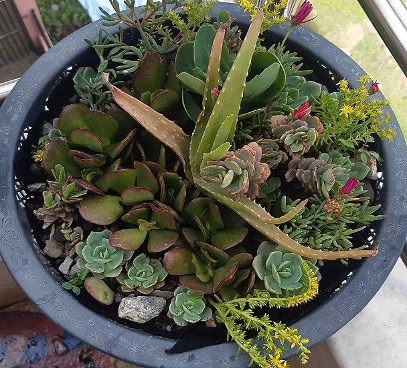
These sturdy plants are perfect for indoor gardens because the warm, dry atmosphere in a home works just fine for them. Succulents need very little water to survive since they store more moisture than other plants. You still get the beauty of indoor greenery without much of the work.
Grow succulents in a small container, a floor pot, or a hanging planter, depending on the size of the plant. Use a coarse potting mix with good drainage and be sure your container has a drainage hole. Too much water causes them to rot and die in a matter of days. Put the plants in an area that gets 4-6 hours of sunlight each day and fertilize them once a year.
The beauty of succulents is that they have so many different looks and colors. Some have spikes and some are smooth; some grow in circles, while others stretch out straight. The most popular succulents for indoor gardening include:
Jade
Christmas cactus
Aloe vera
Snake plant
Burro’s tail
No matter which type of indoor garden you choose, research your plants before you get your hands dirty. Know how often to water and how much sunlight and space they need. If you’re unsuccessful once in a while, the plants can always be replaced.
If you need a little help, consider joining a garden club online or following gardeners on social media. These activities help keep you happy and healthy and engaging with others who have the same interests. So set up your garden indoors and enjoy!
Carmen Dexter is a journalist and teacher living in Texas. Her favorite activities include concerts, football games, and, of course, writing! On any given evening, you'll find Carmen playing with her dogs, Rizzo and Rocky.
An exploration into the benefits and limitations of Ring Theory. Key points:
👉 In Ring Theory, the ill partner becomes the priority, and the other partner cannot reveal their angst and grief to them.
👉 Ring Theory may benefit the person earlier in the illness, but other approaches should be considered for the longer term.
👉 The most important tool in a relationship is a couple's ability to communicate. No single paradigm can take its place.
Daniel Miller, M.D., has been caring for people with advanced illnesses for many years. He has worked in the medical field for many years, including as a primary care physician, urgent care doctor, hospital doctor, and as a hospice and palliative care doc. He hosts community groups that meet both in-person and online; topics include living with advanced illness and philosophical/theological issues such as faith at the end of life or the difference between the sacred and the profane.
video transcription: Hi everybody. I'm Dr. Daniel Miller and one of the medical directors of Hospice of the North Coast. I'm so thrilled to be able to start a video log exploring topics in palliative care and also hospice care. I'm very passionate about these topics, so I hope that you can gather, uh, and explore. Topics with me.
Um, today I wanna be able to talk about a concept that I've been thinking a lot about. It's more of a paradigm actually called Ring theory. I wanna give you a little bit of a context behind it. I was thinking and reflecting on our patients and family and friends. I had the experience of having a terminal illness, and then I had a question, I had a question for myself that I wanted to answer, which is, how does a partner of a person who has a terminal illness respond to that person with a terminal illness?
So I wanted to to reflect on that, and I wanted. See what qualities a partner should have in response to that. How should they be there for that person who has that new diagnosis, a life limiting diagnosis? What I realized was that that question was inadequate in itself because I limited it to only one person, which is the.
But I didn't take into account that there's a relationship in that, a couplehood, a di sometimes we call it psychology. So I expanded my search and reflection to involve couples meaning and couples work. And I've created a, a blog that I've since published in Psychology Today exploring exactly that issue, which is how does a couple deal with a terminal illness when one of the partners has a terminal?
So that became more of a passion of mine recently. One of the things that I've explored is that paradigm of ring theory. If you haven't heard of it, ring theory essentially states that the person who is at the center ring, and if you take the example of one internal ring and you imagine. External rings around there, kind of orbiting that central ring.
Where the central ring is. The person who has a terminal diagnosis or just has a terminal diagnosis, just was diagnosed. All of the central rings, all of the central rings around their friends, their family, and depending on your relationship to that central ring, to that person with a diagnosis, that's your distance from that, from that source, from the.
So the immediate central ring around that person, that's the central ring. It could be the immediate family, your kids, your parents, this consensual ring around. That could be your close friends. The consensual ring around that could be your medical team, could be your hospice team, whatever actually it means for you, because that's the.
Relationships are all different, and only you know what that meaning that that person holds for you or that team holds for you. So I wanted to explore that ring theory paradigm and what it means. And essentially what that paradigm states is that comfort has to always flow into the core. So comfort, nurturing, understanding.
Reflection, ability to empathize. Ability to help process. Always has to go in from the outside rings to the inside rings. It makes sense on first blush. If I was the one with a terminal illness, I would need as much processing and help for my loved ones as humanly. It's difficult enough as it is to be able to understand it for myself and process it on my own without having the support of somebody close to me.
But it would definitely help to be able to have that support from somebody who's in my immediate outer ring, such as my wife.
So that is, that is essentially the concept of ring theory. I gave it some exploration and I. That's incredible. How would I be able to advise somebody to be able to help somebody else in times of need? Cause a lot of people don't know how to show up and be present, and I was thinking that's a good start.
That Ring theory is a wonderful way to explore how a partner who has a terminal diagnosis can be helped by their loved ones in their ability to process. And their ability to cope. One of the things that I do here is that there's amazing positives when we look at that. Some people, for example, some partners are so enthralled with their ability to give to their partner and to be able to help them cope and nurture that.
They just find that that paradigm to be super filling. Some of the negatives in that paradigm, and I just want to go over with you are as follows. I think in the immediate stages of having a terminal diagnosis or of having any significant trauma, without doubt, one needs to have the support of their family.
It's imperative, I think once somebody has had a chance to cope, however, it becomes difficult to be able to have that family member or a friend who's close to. Not being able to share with you the difficulties that they have with the diagnosis. So the concept of of ring theory essentially states that comfort only flows in, but all of the negatives that you feel from the concentric rings can't flow in.
They have to remain into the outer circles. They have to be quote, dumped out. And that kind of creates a little bit of a challenge because as a. As people in, in a committed relationship, loving relationships of whatever form people want to share, and they have a hard time limiting themselves to only being able to set a positive tone because as you know, couples in relationships go through a lot.
There's no just positive affect. Relationships are difficult and. Being able to only express positives is at best superficial and doesn't take into account the complexity of a relationship. And I think giving it more reflection when a partner who has a terminal illness has had a chance to cope and process, they want to be able to grow and mature and still have the negatives that we would call.
Of the difficult emotions and the feelings that their partner has, I think they wanna be able to process it with them. So that ring theory I think is a good start. Comfort in totally works. I think initially dumping out I think works initially as well because the partner who with the terminologist has to have that support in nurturing.
However, you has to be nuanced and it has to be thought of. In a complex fashion and whatever that is will work for you, but just comfort in is probably not going to do it completely. In a committed relationship, that's a loving relationship where growth, nurturing, and acceptance of who we really are is at the forefront.
We want to have that comfort, but I think we also want to have that c. And complexity that's built into all relationships. And as much as I want to support completely ring theory, I mostly support good communication, whatever that is for you. But complexity relationships, I think deserve good communication.
And if Ring theory works, that's wonderful. And if it doesn't completely, I'll totally understand that as well. So for this venture, for this initial, Video log. I leave that with you and until next time on other topics in palliative care and hospice. Thank you.
November is National Hospice and Palliative Care Month, and Hospice of the North Coast is participating in the Meeting You Where You Are campaign all month long.
In support of this month-long initiative, we will be providing education, sharing patient stories and demonstrating our mission.
Hospice of the North Coast’s Pacifica House is more than a clinical facility for end-of-life care. It is a special place where hospice families and friends can come together and comfort each other during difficult times.
Throughout the pandemic, separation and isolation became the norm for a lot of people. And in many clinical settings personal contact with patients was not allowed, often depriving families of the opportunity to say a final “goodbye.” In contrast to these locations, Pacifica House has continued providing a safe and nurturing environment where families can be together, in person.
Oftentimes, our hospice team becomes an extension of a patient’s family. From the moment they come through the doors of Pacifica House we begin to know them. We hear their stories, we laugh with them, and we hold their hand when they need us. Last year, this sense of family resulted in a special experience for one Pacifica House patient. Let me introduce you to Angel (fictitious name).
Angel was 37 years old when diagnosed with colon cancer. He was a husband and father of three children under the age of 15 (two boys and a girl). He was also a 20-year active-duty Marine.
A year following Angel’s diagnosis, he came to Pacifica House for help managing his pain and symptoms.
Angel was a man of faith and shared with his hospice team that, while in the hospital, he had a spiritual experience and believed that God had given him extra time to say ‘goodbye’ to his family and celebrate with his daughter on her 8th birthday. However, due to the progression of his illness, he became worried that he would miss his little girl’s birthday, which was three days away.
When the Pacifica House staff learned of Angel’s wish, they knew they must make it come true.
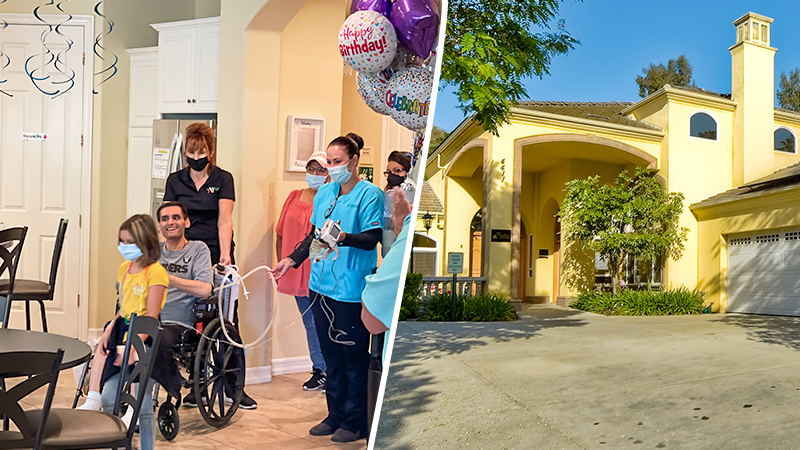
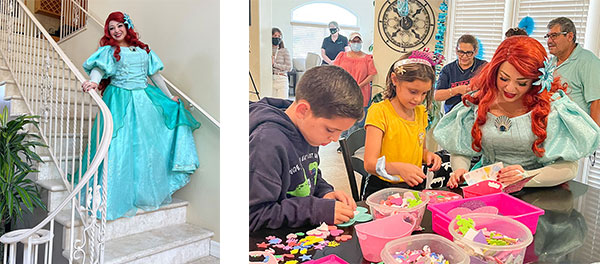
Together they pooled their resources and quickly planned a surprise party to take place the next day. There was pizza, balloons, and mermaid-themed decorations. The icing on the (cup)cake was a real-live mermaid! Hospice LVN, Darleen, appeared in full costume as Disney’s Ariel from The Little Mermaid. Angel’s daughter reacted with tears of joy and, together with her brothers, spent time making arts and crafts with Ariel.
The hospice team also surprised Angel by presenting him with an Honor Salute. This unique program recognizes veteran hospice patients. It gives pride and peace to our veterans while bringing family and friends to celebrate their loved one’s military service. Most often it is the last public thank-you they will receive.
Whether it was Disney magic, divine intervention, or the hearts of an entire hospice team, a celebration occurred at Pacifica House in the midst of great sadness. Angel passed two days later, on his daughter’s birthday, with loved ones by his side. What an honor it was to make Angel’s final wish come true and create a special day that will be remembered fondly as a beautiful celebration of life … for both father and daughter.
The people at Hospice of the North Coast were so kind and assisted me in getting my husband into Pacifica House where he was given tender and loving care until the end. During his long journey from hospital to skilled nursing and back to the hospital and back to skilled nursing, the anxiety and helplessness that I felt was overwhelming. His admittance to Pacifica House was the first time I felt any peace in knowing he was in the best place. Admitting that I had to let him go, that I could no longer make him better was devastating, but the nurses and staff helped me make it through. I will be forever grateful. ~ Patricia N.
The only short term in-patient facility in North County San Diego, Pacifica House is a home for hospice patients who require a higher level of skilled care to manage pain and symptoms.